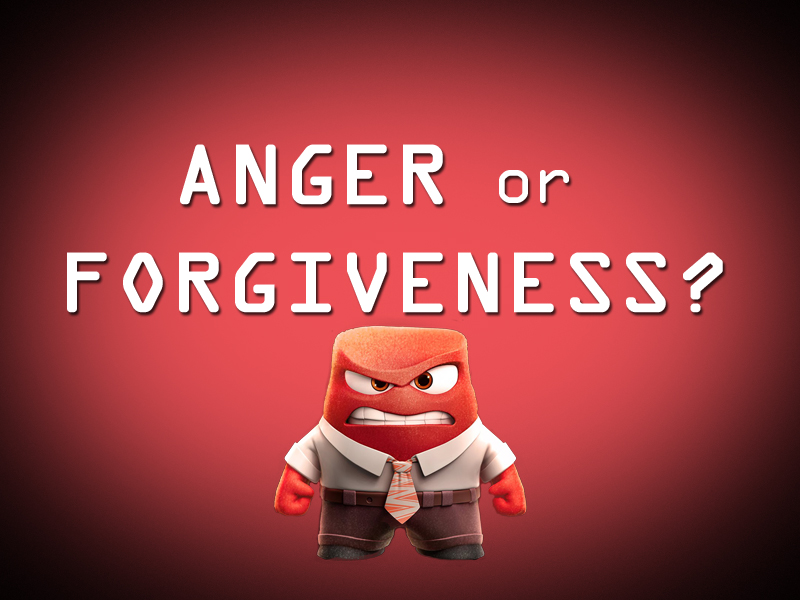
 There are pains in life that come from various origins. One thing that we all have in common is pain from those whom we consider close conspire against us. The closer that the person is to us, the greater usually is the sting. It was even prophesied in Psalm 41:9 that Jesus would deal with Judas, a friend who betrayed him. Often anger is our reaction. Depending on how deep the wound is, or how serious the ramifications are, dealing with pain and anger from personal betrayal is hard.
A couple of things before I turn to scripture. 1) Forgiveness is not saying that the offense wasn't really an offense. It doesn't mean that we must say that what the other party did was OK. 2) Forgiveness doesn't mean that you are to be a doormat and continue to or return to a position that will compromise you. 3) Forgiveness also doesn't mean forgetting. "Forgive and forget" sounds great if you live in a Wonderland, or if you erase memories at will. God can do that, but in our imperfection, we normally cannot.
Forgiveness is determining that you are going to act in a forgiving manner toward the party who injured you. Forgiveness means that you will forsake the prerogative to hold that person in a position of judgment or vengeance. Unforgiveness is something that keeps coming back, and we must keep killing it day by day, moment by moment if necessary, so that Satan does not get a foothold in our lives. This is something that we must war against.

Secondly, we are told to forgive as Christ forgave us, Ephesians 4:31-32. If we truly understand our treason, our betrayal of the most glorious, most valuable treasure in the universe, and our exchange of him for idols, we would begin to comprehend our forgiveness. If we are exhorted and instructed to forgive as Christ forgave, even the deepest of hurts falls under that teaching.
I am preaching to myself today. Pray for me. Two things to leave you with:
A better blog post and teaching than mine: from Desiring God, here.
And a quote from Voddie Baucham that I found very convicting:
“If we refuse to forgive, we have stepped into dangerous waters. First, refusing to forgive is to put ourselves in the place of God, as though vengeance were our prerogative, not his. Second, unforgiveness says God’s wrath is insufficient. For the unbeliever, we are saying that an eternity in hell is not enough; they need our slap in the face or cold shoulder to “even the scales” of justice. For the believer, we are saying that Christ’s humiliation and death are not enough. In other words, we shake our fists at God and say, “Your standards may have been satisfied, but my standard is higher!” Finally, refusing to forgive is the highest form of arrogance. Here we stand forgiven. And as we bask in the forgiveness of a perfectly holy and righteous God, we turn to our brother and say, “My sins are forgivable, but yours are not.” In other words, we act as though the sins of others are too significant to forgive while simultaneously believing that ours are not significant enough to matter.”


